The connection between Harold’s public testimony and his roadside humiliation became clear when David obtained records showing that Officer Kowalski was Robert Chen’s nephew. What had happened to Harold wasn’t just an aggressive traffic stop—it was retaliation for his political speech, carried out by a police officer who had personal reasons to want to silence an elderly veteran. Armed with this information, I began building a case that went far beyond Harold’s individual experience.
I reached out to other motorcycle riders in our community, particularly veterans, and discovered a pattern of excessive enforcement that seemed to target older riders. In the six months following Harold’s council testimony, there had been fifteen citations for motorcycle noise violations—compared to three in the previous two years. More significantly, twelve of those fifteen citations had been issued to veterans over the age of sixty.
I organized a group of affected riders and their families, creating a coalition that combined the political advocacy skills I’d learned decades earlier with the righteous anger of people who had been systematically harassed by local authorities. We called ourselves the Desert Riders Alliance, and our first meeting drew forty people to the community center. By our third meeting, we had over a hundred members and the attention of local media.
The story we told was compelling: elderly veterans who had served their country with honor were being targeted for harassment by local police, apparently in retaliation for their political advocacy. The visual of Harold’s burned face, contrasted with photos of him in his Army uniform from Vietnam, provided a powerful narrative that resonated with both veterans and civilians. Our media campaign coincided with David’s legal strategy, which included not just Harold’s individual case but a broader civil rights lawsuit alleging systematic harassment of veterans based on their age and political speech.
The city’s response was initially defensive. Mayor Patricia Williams claimed that police were simply enforcing existing ordinances and that any suggestion of bias or retaliation was unfounded. But that response became untenable when local television stations began investigating and found additional examples of questionable enforcement practices.
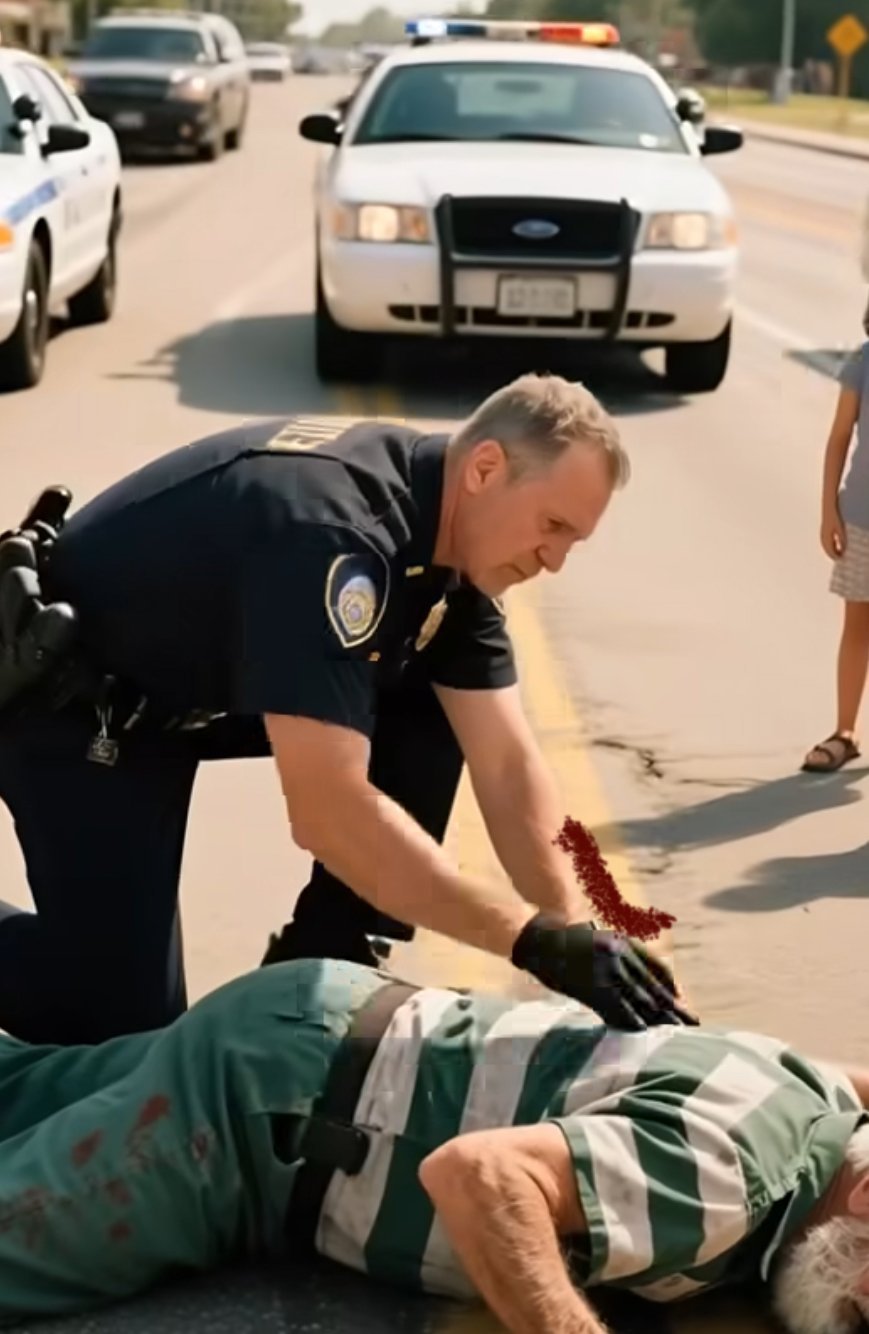
The footage of Harold lying on burning asphalt while four patrol cars provided backup for a noise violation became a symbol of law enforcement overreach that played repeatedly on local news programs. The breakthrough came when Dr. Maria Reeves, director of the regional VA hospital’s PTSD program, agreed to testify about the therapeutic value of motorcycle riding for combat veterans.
Her presentation to the city council was both medically authoritative and emotionally compelling. “For many veterans dealing with trauma and adjustment issues,” Dr. Reeves explained, “motorcycle riding provides a sense of freedom and control that is essential to their mental health.
When we criminalize or shame these activities, we’re not just enforcing traffic laws—we’re potentially undermining years of therapeutic progress.”
The council session where Dr. Reeves testified was packed with veterans, their families, and community supporters. Harold sat in the front row, his face still showing faint marks from his encounter with the asphalt, his presence a quiet reminder of what was at stake.
The most powerful moment came when Walter “Tank” Morrison, an eighty-five-year-old World War II veteran who still rode his motorcycle to the grocery store twice a week, addressed the council directly. “You want to know who belongs on these roads?” Tank asked, his voice carrying the authority of someone who had earned the right to speak. “The men and women who fought to keep these roads free.
Harold Morrison earned his place on every highway in this country when he was dodging bullets in Vietnam so you could sit here and debate traffic ordinances.”
The council’s vote was unanimous: the motorcycle noise ordinance was suspended pending review, the police department would receive additional training on appropriate enforcement procedures, and there would be a formal review of all traffic citations issued to veterans over the past year. More importantly for Harold, Officer Kowalski was reassigned to desk duty pending investigation of his conduct. Three months later, he was terminated from the police department for violating department policies regarding respectful treatment of citizens and appropriate use of force.
Harold never got his day in criminal court—the noise citation was dismissed when it became clear that his exhaust system met all legal requirements. But he got something more valuable: the restoration of his dignity and the knowledge that his community supported his right to enjoy his retirement without harassment. Six months after that terrible afternoon on burning asphalt, Harold was back on his motorcycle, leading a group ride of veteran bikers to the state capitol for a rally supporting veterans’ rights.
The man who had been told he didn’t belong on the road had become a symbol of the right of all citizens to be treated with respect by the authorities who serve them. The Desert Riders Alliance continued to meet monthly, evolving from a crisis response group into an ongoing advocacy organization that monitored police practices and supported veterans’ rights. We worked with the police department to develop training programs that helped officers understand the special needs and sensitivities of elderly citizens and combat veterans.
Harold even participated in those training sessions, sharing his story not to shame or blame, but to help younger officers understand the impact their words and actions could have on people who had already given so much to their community. “I don’t want revenge,” Harold told one group of new recruits. “I want respect.
Not because I’m a veteran, but because I’m a citizen. The badge gives you authority, but it also gives you responsibility to treat every person you encounter as someone who matters.”
The personal transformation was as significant as the political victory. Harold had gone from feeling defeated and unwanted to becoming a leader in his community’s ongoing efforts to ensure fair treatment for all citizens.
The man who had considered selling his motorcycle became an advocate for other riders who faced similar challenges. But perhaps the most important change was in our marriage. Working together on this campaign had reminded both of us of capabilities and strengths we’d forgotten we possessed.
I’d rediscovered my passion for advocacy and organizing, while Harold had found new purpose in mentoring other veterans and working for systemic change. One evening, about a year after the incident, Harold and I were sitting on our porch watching the sunset paint the desert mountains in shades of orange and purple. “You know what the real victory was?” Harold asked me.
“What’s that?”
“Not getting that cop fired, or winning the lawsuit, or changing the ordinance. The real victory was remembering that we don’t have to accept being treated like we don’t matter.”
He was right. The confrontation with Officer Kowalski had initially been devastating because it had made Harold feel powerless and unwanted.
But the community response had demonstrated that he did matter, that his voice carried weight, and that there were people willing to stand with him when his rights were threatened. The Desert Riders Alliance now has over 200 members and has successfully advocated for policy changes in three neighboring communities. We’ve helped establish protocols for appropriate treatment of elderly citizens during police encounters, and we’ve created support networks for veterans who face age discrimination in various contexts.
Harold still rides his motorcycle to the VA hospital every month, but now he’s often accompanied by other veterans who have found community and purpose through our organization. The ride that was once a solitary journey to manage his health has become a shared experience that strengthens connections among men and women who understand each other’s service and sacrifice. Officer Kowalski found employment with a private security company in another state.
We heard through mutual friends that he eventually apologized to Harold personally, acknowledging that his treatment had been inappropriate and his comments were inexcusable. Harold accepted the apology because that’s who he is, but he also made it clear that personal regret doesn’t undo the damage caused by abuse of authority. The lesson we learned—and the one we continue to share with others—is that standing up to injustice requires both individual courage and community support.
Harold couldn’t have fought this battle alone, and I couldn’t have organized an effective response without the support of people who shared our values and our determination to ensure fair treatment for all citizens. Sometimes the most important battles are fought not on foreign battlefields, but in our own communities, against people who forget that the authority we grant them comes with the responsibility to treat every citizen with dignity and respect. Harold earned his place on America’s roads through decades of service to his country.